TL;DR
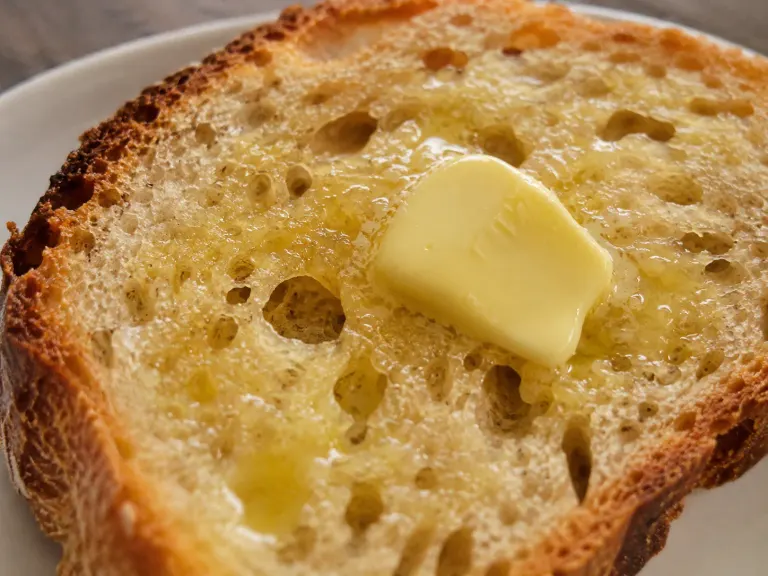
Buttered bread is greater than the sum of its parts. Butter's fat carries flavor molecules, enhances aroma and texture, and activates brain reward circuits. Warm, toasted bread plus butter creates a multisensory experience that is creamy, aromatic, and irresistibly satisfying.
Executive Summary
Bread is mainly starch and gluten protein (~60–70% and ~7–12% respectively) with ~35–45% water[1]. Butter is ~80–82% fat (mostly milk triglycerides, ~70% saturated, 30% unsaturated) with ~16–17% water, plus ~1–2% salt and milk solids[2][3]. When butter is spread on bread, its fats coat starch/gluten and carry fat‐soluble aroma molecules into the mouth, while salt (in salted butter) and butter’s own flavor compounds (e.g. diacetyl, butyric and caproic acids, lactones[4]) mix with bread’s Maillard‐derived aromas (pyrazines, pyrroles, 2‑acetyl‑1‑pyrroline[5]). Sensory‐scientifically, fat changes mouthfeel (creamy, lubricating), slows and modulates aroma release, and boosts flavor by integrating taste and retronasal smell[6][7]. Neurologically, high‐fat (and salty) foods powerfully engage reward circuits (insula, orbitofrontal cortex, amygdala)[7][6], and learned preferences (culture and experience) reinforce the pleasure of buttered bread. Culinary factors (warmth and toasting) further melt butter, intensify Maillard browning and crispness, enhancing contrast with butter’s creaminess. Variability in breads (white, whole grain, sourdough, rye, etc.) and butters (cultured vs sweet cream; salted vs unsalted vs ghee) affects flavor profiles and melting properties. In summary, the rich lipids and flavor chemistry of butter synergize with bread’s structure and aroma, creating a multisensory indulgence that is both physiologically rewarding and culturally celebrated.
Food Chemistry: Bread and Butter Composition
Bread (especially white wheat bread) is ~50–70% carbohydrate (mostly starch), ~7–12% protein (gluten from gliadins/glutenins), ~35–45% water, with small amounts of fat and fiber[1]. The starch–protein matrix (gluten network with embedded starch granules) forms the porous crumb. Butter is defined by law as ≥80% milkfat; typical butter is 80–82% fat, 16–17.5% water, ~1–1.5% salt (in salted butter), and ~1% milk solids[2]. Butterfat is ~70% saturated fatty acids (e.g. palmitic, stearic) and ~30% unsaturated (oleic, linoleic)[3], giving butter a melting point near body temperature (~32–35 °C). Butter’s minor constituents include glycerides, phospholipids, and enzymes, and cultured butter develops diacetyl (2,3-butanedione) and other aromatic metabolites.
When butter contacts bread, its lipids interact physically and chemically. Butterfat can coat starch granules and gluten strands in the crumb (a “lamellar” structure), softening and lubricating the bread matrix. Lipids in dough (from flour or added fats) are known to stabilize gas cells and affect crumb structure[8]; similarly, butter’s fat permeates the pore walls, making the texture smoother and delaying staling. Butter’s water also hydrates the surface. Chemically, butter delivers fat-soluble flavor compounds onto the bread. Bread crust contains Maillard reaction products (pyrazines, pyrroles, furans, and especially 2-acetyl-1-pyrroline which smells like baked bread/popcorn)[5]. Some of these compounds partition into the butter layer or are carried into the retro-nasal airflow. Conversely, butter itself contains short fatty acids (butyric, caproic acids), ketones (diacetyl), lactones (δ-hexanolactone, γ-dodecanolactone), sulfur volatiles, and aldehydes that give a “buttery” aroma[4]. When heated (as on warm toast), butter’s milk solids undergo additional browning, generating caramel and roasted notes. In sum, the chemistry of butter and bread produces a rich mix of volatile aromatics and flavor precursors that blend in the mouth.
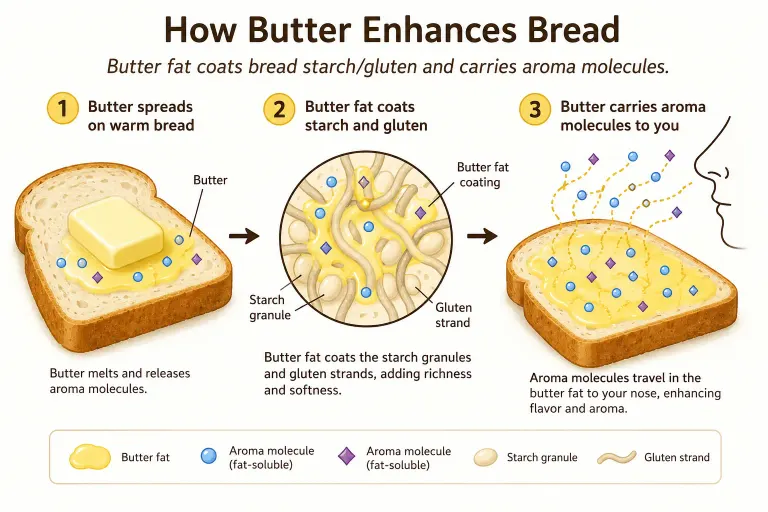
Figure: Chemical interactions of butter and bread. Lipid (butterfat) coats starch/gluten in bread, carrying fat‐soluble aromas, while Maillard and butter volatiles combine to create a complex flavor profile[8][4].
flowchart LR
BC["Bread (starch + gluten + water)"] -->|Lipid coating #38; hydration| CC["Crumb texture (creaminess)"]
CC --> Sens["Mouthfeel (smooth, soft)"]
FlvBD["Maillard crust volatiles (pyrazines, 2-AP)"] --> Aroma["Enhanced aroma release"]
BF["Butter fat #38; flavor compounds"] -->|Dissolves/ carries| Aroma
Aroma --> Sens
Salt["Salt (if present)"] --> SalFlv["Enhanced saltiness, flavor contrast"]
BF --> Molecules["Butter volatiles (diacetyl, fatty acids, lactones)[4]"]
Molecules --> Aroma
SalFlv --> Sens
BF --> CC
Sensory Science: Taste, Aroma and Texture
In sensory terms, adding butter transforms bread’s flavor and mouthfeel. Butter fat is creamy and lubricating, creating a “velvety” mouthfeel: it coats the tongue and palate, smoothing the bread’s crumb and making each bite feel rich. The fat also modulates texture: crumb pores fill with melted butter, so bread feels moister and heavier in the mouth. Butter’s water content adds to juiciness. Salted butter provides immediate saltiness, which enhances overall flavor by suppressing bitterness and boosting sweetness and umami-like sensations (salt acts as a flavor enhancer).

Aroma and flavor perception are profoundly affected by fat. Many bread and butter aromas are fat-soluble; the lipid layer traps and slowly releases aroma molecules during chewing. Butter’s fat carries volatile compounds from both the butter and the bread (e.g. the roasted-grain notes of crust, the dairy notes of butter) into the retronasal airflow as you chew[4][5]. This sustains the flavor in the mouth even after swallowing. In essence, the brain perceives a single flavor that combines tastes (sweet from starch, salty from butter, any bitter notes) with these combined aromas. Psychophysically, retronasal odorants (smells via the throat during chewing) strongly influence perceived taste quality[6]. For example, butter’s diacetyl gives a buttery aroma, but the brain may “taste” creaminess or even sweetness without a sugar. The integration is such that an odor alone can elicit a taste percept in the absence of a tastant[6].
Fat also impacts satiety and palatability. Rich, high-fat foods tend to be rated as more satisfying; the oral lubrication and slower digestion of fats contribute to a fuller feeling. Moreover, mouth coatings of fat can amplify subsequent flavor perception by prolonging receptor exposure. In sensory experiments, foods with higher fat content often receive higher hedonic (liking) ratings, partly due to richer texture and prolonged flavor.
Figure: Timeline of sensory events when eating buttered bread. Soon after biting, butter melts and mixes with saliva, taste receptors detect salt and fat, and aromas are released retronasally[6]. Integrated signals reach the brain, triggering pleasure.
Neuroscience: Reward and Flavor Integration
The brain’s response to buttered bread is rooted in neural flavor integration and reward. Multiple senses converge: gustatory (taste buds for sweet, salty), olfactory (smell of butter and bread compounds via retronasal route), and somatosensory (texture, temperature). Functional imaging shows that combined taste and retronasal odor signals create overlapping neural patterns in the insula and orbitofrontal cortex[6]. In other words, the brain encodes the flavor of buttered bread as a unified percept.
Fat and salt are both inherently hedonic to humans. The taste of fat (though complex) and the texture of fat-rich foods robustly activate brain reward centers (insula, orbitofrontal cortex, amygdala)[7][9]. For example, high-fat dairy stimuli evoked sustained neural activation in reward areas, independent of taste intensity[7], suggesting that the brain recognizes fat-caloric content via specific sensors and values it. Importantly, buttered bread also stimulates learned preference circuits: if one grew up eating buttered toast, the sight and smell can trigger conditioned dopamine release and nostalgia.
Salt in butter adds another layer: salt receptors (ENaC channels) signal at low concentrations and amplify other tastes. The brain has dedicated “flavor” neurons that respond to fat combined with salt and sweet, enhancing the overall pleasantness. Individual differences exist: genetic variations (e.g. in the fatty-acid receptor CD36) influence fat taste sensitivity, and age or diet can modulate reward responses. But universally, a mouthful of buttery bread provides a strong positive reward signal, reinforcing the instinct to enjoy such energy-rich, savory foods.
Culinary and Thermal Effects
Temperature and preparation greatly influence buttered bread enjoyment. Butter’s melting: Butter softens around room temperature and rapidly melts on warm bread. A spread of cold butter on hot toast will liquefy, coating the surface and seeping into the pores. Melted butter releases aroma compounds more readily, and the warm fat feels silky. Conversely, very cold, hard butter on cold bread yields lumps that don’t release much aroma until chewed. Thus, warmth increases flavor impact. For optimal enjoyment, many chefs recommend using butter near room temp and bread that is freshly baked or lightly toasted.
Toasting bread amplifies contrast: the Maillard browning of crust produces toasted, caramelized flavors[5] and crunchy texture, which juxtaposes butter’s richness. Warm toast has a dry, crispy crust and tender crumb, so melted butter both soaks into the crumb and pools on the surface. The contrast of crisp vs creaminess is highly appealing. Toasting also further drives off water, concentrating bread’s starch sweetness and making butter’s fatiness stand out more. In culinary practice, butter is often the finishing touch: e.g. brushing warm toast or steamed vegetables with butter to carry flavors and add gloss. Butter can also be browned (beurre noisette), creating nutty notes that deepen the complexity on bread.
Finally, spreadability and form matter: whipped or European-style butters have a higher fat content and spread very easily, immediately coating bread. Compound butters (with herbs or garlic) leverage butter’s carrier role for additional flavors. As a simple experiment, one can compare plain bread vs buttered bread at different temperatures, noting that tasters invariably report the buttered sample as more flavorful, especially if warm (no formal citation, but a common culinary finding).
Variability: Types of Bread and Butter; Cultural & Individual Differences
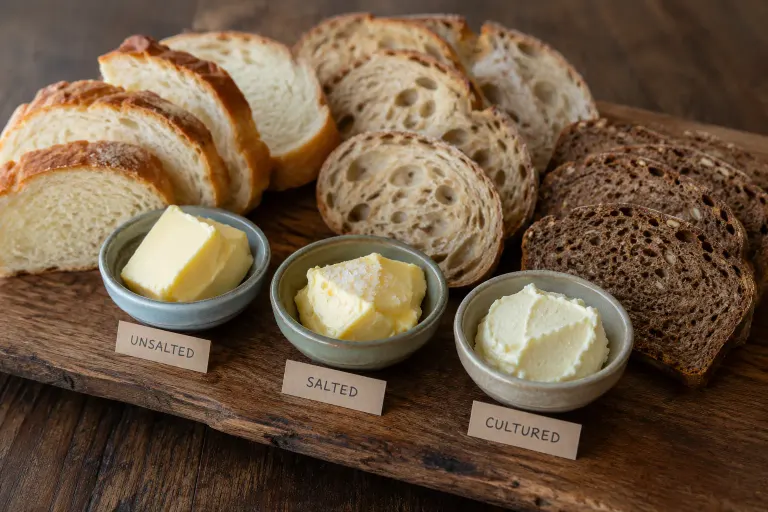
Bread varieties: Almost any bread is improved by butter, but effects vary. - White sandwich bread (soft crumb, mild taste) mainly gains richness and moisture from butter. - Whole wheat or multigrain bread (denser, nuttier, slightly bitter) is mellowed by butter’s fat, which softens bitter notes and adds mouthfeel. - Sourdough (chewy, tangy) paired with butter gives a balance of acid and creaminess. - Rye and pumpernickel (earthy, intense) can feel too heavy without fat – butter rounds out their flavor. - Crusty artisanal loaves (open crumb) absorb more butter in the holes. In general, bread with more open structure soaks up and releases butter more readily; heavy/crumbly breads benefit most from the moisture and fat of butter.
Butter varieties: - Unsalted vs Salted: Unsalted butter (no added salt) showcases pure dairy richness, allowing one to control salt. Salted butter (with ~1–2% salt[2]) delivers an immediate savory punch and enhances sweetness in bread. Many cultures (e.g. Northern Europe) prefer salted butter on bread for this reason. - Sweet cream vs Cultured: Cultured (European) butters have added lactic bacteria, yielding tangy, nutty aromas (higher diacetyl) that boost complexity. Sweet cream butter is milder. - Clarified butter (ghee): Virtually pure fat, high smoke point, with caramelized notes; in Indian cuisine, ghee on bread (naan) adds deep flavor. - Plant-based spreads: Vegan “butters” (margarine or nut spreads) often lack the rich volatile profile of real butter, but can mimic mouthfeel if high in oil.
| Bread Type | Crumb Texture | Flavor Profile | Butter Synergy |
|---|---|---|---|
| White sandwich | Soft, fine, fluffy | Mild, slightly sweet | Butter adds creaminess and richness to an otherwise plain base. |
| Whole wheat/multigrain | Dense, coarser | Nutty, slightly bitter | Fat mellows bitterness and hydrates fiber, enhancing sweetness. |
| Sourdough | Chewy, open | Sour, tangy, wheat | Butter’s fat balances acidity, adds a creamy counterpoint. |
| Rye/Pumpernickel | Dense, firm | Earthy, caraway | Butter softens strong, savory flavors and moistens crumb. |
| Artisan (baguette, ciabatta) | Crispy crust, chewy crumb | Wheaty, complex | Holes soak up butter; contrast of crunch and fat is pleasurable. |
| Gluten-free/other | Often dry or crumbly | Grainy, sometimes sweet | Fat and moisture from butter prevent dryness, improve mouthfeel. |
| Butter Type | Fat % | Salt | Aroma/Taste Notes | Melting Behavior | Pairing Notes |
|---|---|---|---|---|---|
| Unsalted sweet cream | ~80–82% | 0% | Pure creamy milk | Melts at ~32–35 °C (smooth melt) | Baking, when recipe controls salt. |
| Salted butter | ~80–82% | ~1–2% | Creamy + salty, more savory | Similar melt | Spreading on bread for enhanced flavor. |
| Cultured European | ~82%+ | 0–1% | Tangy, rich (diacetyl notes) | Often softer at room temp (higher unsat) | Gourmet breads; accentuates flavors. |
| Clarified butter (Ghee) | ~99% | 0% | Nutty, caramelized | High melt point (~40–45 °C), glossy | Toasted breads, Indian cuisine. |
| Vegan/plant butter | ~80%+ | Varies | Typically mild/oily | Depends on oils; often needs refrigeration | For lactose-free diets (less authentic flavor). |
Cultural practices: Buttered bread is nearly universal. In the UK and Ireland, “buttered toast” is a breakfast staple (often with tea). France’s tartine (baguette+butter) highlights butter’s quality. Scandinavian crispbreads are often served with butter and cheese. In India, ghee on naan or bhakri serves a similar role. Butter with jam or garlic (garlic bread) are culinary traditions that exploit butter’s flavor-carrier role.
Individual differences: Some people have more or less sensitivity to fat and salt due to genetics and physiology. For instance, variations in the CD36 fat receptor gene affect fat taste perception (unspecified in these sources). Age can reduce taste sensitivity, so older adults may prefer more butter/salt to achieve the same flavor intensity. Learned preferences are strong: if someone associates butter with comfort or treats, their brain’s reward response will be greater. Food context also matters (hunger, diet context).
Practical Implications and Tips
To maximize flavor of buttered bread: use good-quality butter and fresh bread. Let butter warm to room temperature (for spreadability and aroma release) and apply to warm or toasted bread to melt it. A lightly buttered, toasted slice yields more aroma and contrast than a cold slice with hard butter. For sensory experiments, one can compare tasting plain bread vs bread with known amounts of butter (and salt) to quantify the effect on flavor rating. Adding mix-ins (garlic, herbs, honey) to softened butter can introduce new aroma compounds that butter will carry and release. To experiment with sweetness, note that butter’s fat and any salt will enhance perceived sweetness in bread (try butter vs margarine, or salted vs unsalted to isolate salt’s effect).
In cooking, remember that butter deepens flavors when used in pan or oven (browning onions or sautéing in butter yields a sweeter, more complex result than oil alone). For a quick test: take two identical pieces of toast, leave one plain and spread a thin layer of butter on the other; chewers almost always rate the buttered toast as tastier, creamier, and more satisfying. (This simple test reflects the sensory, chemical, and neural factors discussed above.)
Summary: Bread on its own provides starch and subtle grain aromas, but butter adds fat, flavor compounds, and textural richness. Chemically, the butter lipids bind flavor molecules and alter the crumb; sensorially, fat smooths and amplifies flavor through retronasal smell; neurally, fat and salt hit reward centers. These factors combine so robustly that the experience of eating buttered bread is far greater than the sum of its parts, explaining why “bread + butter” is such a universally beloved pairing[5][7].
Sources
[1] (PDF) Protein Ingredients in Bread: Technological, Textural and Health Implications
[2] [3] Center for Dairy Research | Butter Science 101
[4] Characterization of the volatile compounds that constitute fresh sweet cream butter aroma - Experts@Minnesota
[5] An Introduction to the Maillard Reaction: The Science of Browning, Aroma, and Flavor
[6] Tastes and retronasal odours evoke a shared flavour-specific neural code in the human insula | Nature Communications
[7] [9] Frontiers | Dietary fat induces sustained reward response in the human brain without primary taste cortex discrimination
[8] Lipids in bread making: Sources, interactions, and impact on bread quality - ScienceDirect