TL;DR
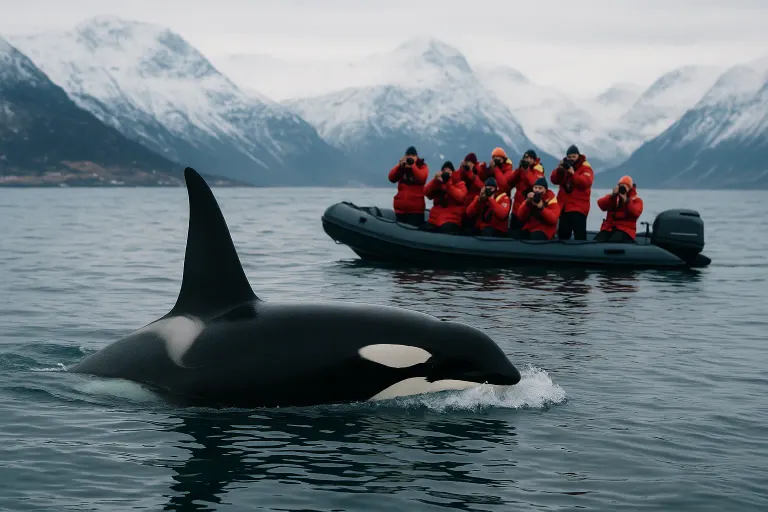
For a boat-based orca safari near Tromsø, the best time is late November through December, and Skjervøy and its fjords are where the reliable sightings are. Both November and December give good odds of seeing orcas (and humpbacks). Late November and early December have slightly more daylight, while mid to late December is the darkest part of the polar night. Avoid late January, when sightings taper off, and February, when the whales have usually moved on.
Orca season around Tromsø
Whale-watching season in Tromsø is winter. Every year from early November through January, large numbers of orcas (killer whales) and humpback whales come into the fjords of northern Norway to feed on huge schools of herring[1][2]. During peak season it’s common to see dozens or even hundreds of whales in the area, and one travel blogger reports seeing hundreds of orcas alongside dozens of humpbacks on peak days[3]. Outside that window, sightings drop off sharply (by February the whales have usually moved on)[4], so a trip between November and January gives you the best chance of an encounter[5].
Huge shoals of Atlantic herring gather in the fjords to overwinter and spawn, and the orcas and humpbacks follow them. The whales tend to concentrate in the particular fjords where herring are plentiful and leave once the herring disperse. Orcas often hunt together, herding the herring into tight balls before they feed. That winter herring is what makes the Tromsø region one of the best places in the world to see orcas in the wild[6].
November or December?
Both months fall within Tromsø’s peak orca season and usually give good odds, and neither is clearly better than the other. The first orcas tend to show up in late October or early November, and by mid-November, as the herring schools arrive, there are a lot of them[7]. A travel blog’s guide to whale watching in Tromsø says that from mid-November until mid-January your chances of seeing whales are “as good as they get”[8].
If the herring arrive late that year, there may be fewer whales in the first week or two of November. By mid to late November the orcas and humpbacks are usually there in full force[9], so the second half of the month is the safer bet.
December is right in the peak feeding period, and many tour operators consider it a peak month for orcas and humpbacks in northern Norway[10], so there are usually as many whales as in late November, or even more. It’s also polar night in Tromsø, with no direct sunlight, but tours still run every day and you can see the whales in the few hours of daylight and twilight[11]. The holidays make it a popular time to visit, so tours and hotels book up quickly[12]. Book your whale safari and accommodation well in advance.
Early January can also be very good for orcas, but by mid to late January the herring may start to leave, and sightings taper off with them[9].
The most reliable stretch is late November through December[9]. Within it, go with whatever fits your schedule, and weigh late November’s slightly longer daylight against December’s festive atmosphere (and near-constant darkness).
Where to see the orcas
In recent years, nearly all the whale activity has been north of Tromsø, around the island of Skjervøy and the fjords nearby (such as the Kvænangen fjord)[13]. Skjervøy is about 200 to 250 km north of Tromsø, roughly 3 to 4 hours by road or a couple of hours by boat[14]. The whales gather there because that is where the herring have been spending the winter, and safari boats head out to the fjords near Skjervøy every day to find them feeding[14]. Orcas and humpbacks often feed side by side in the same fjords, with snowy peaks behind them.
A decade ago you could see whales much closer to Tromsø, for example in the fjords around Kvaløya (an island just outside the city). Then the herring moved north, and the whales followed. Since about 2017 the orcas and humpbacks have spent the winter around Skjervøy[15]. No one knows whether that will change again, but for now all the Tromsø-based tours go north to where the whales are. (Some locals do see whales from shore there now and then, but a boat trip gives you the best encounters, often with curious orcas coming right up to the boat[18].)
If you’re staying in Tromsø, you can reach the waters off Skjervøy with a long boat transfer (usually on a larger boat or catamaran) or by bus to Skjervøy and then out on a smaller boat[16][17]. Either way, expect several hours of travel each way. Many operators sell it as one package, for example a coach to Skjervøy early in the morning, a whale safari by RIB (rigid inflatable boat) or small boat, and back in Tromsø by evening[19]. That way you don’t have to sort out the logistics yourself. If you’d rather travel independently, you can drive or take public transport to Skjervøy and join a local boat tour there[20], but most visitors find an organized tour from Tromsø easier.
Tour operators
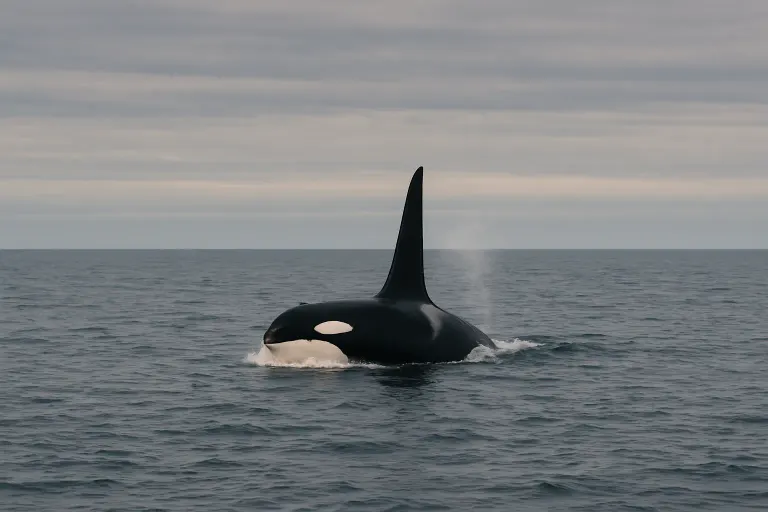
Tromsø has several tour operators that run orca safaris from November to January, all of them by boat (there are no orca-watching flights). Here are three with a good reputation for this season.
Brim Explorer runs a “silent” whale watching cruise on a large hybrid-electric catamaran[21]. It’s a full-day tour that leaves Tromsø by boat and heads out to the whale grounds. The boat has warm indoor lounges, a café, restrooms, and spacious decks. In the whale areas the captain can switch the hybrid engine to near-silent electric propulsion, which disturbs the orcas less and is more eco-friendly[21]. It’s a good option if you want comfort and stability (and a bit of luxury) along with good views. The tours are very popular and often sell out in advance during peak season.
Dervola Adventure is a local operator based in Skjervøy that runs small-group trips, and the author of the travel blog Journey By Backpack calls it their favorite whale watching company[22]. They use smaller boats (RIBs or a modest vessel carrying around 10 to 12 passengers), so you get close to the whales and the boat can move to wherever they are. The guides are knowledgeable locals who care about the whales’ welfare and follow respectful approach guidelines[22]. If you want a more personal, adventurous tour (and don’t mind some Arctic wind in your face!), this kind of small-boat trip is ideal. The tours usually meet in Skjervøy. Some packages include a transfer from Tromsø, or you can get there on your own.
Arctic Whale Tours is a larger company. For its Skjervøy trips it uses a comfortable, heated classic boat, the historic Hagbart Waage[23], and it also runs full-day safaris from Tromsø harbor. The company emphasizes sustainability and has a whale sighting guarantee: if you don’t see any whales, you can join another trip for free[24][25]. It’s a good choice if you value indoor seating, meals on board, and the peace of mind of the guarantee. The guides are knowledgeable and give photography advice during the tour.
There are other operators too, including RIB safaris and more local outfits in Skjervøy. When choosing, think about how comfortable you are on boats. A RIB is exciting and can get you very close to the whales, but it’s open and fast, so expect an extremely cold ride, and a bumpy one on rough days. Larger boats and catamarans are warm and sheltered, but you share them with more people. Many visitors take the bigger boat from Tromsø for comfort, while dedicated wildlife enthusiasts sometimes head to Skjervøy for a small boat or RIB to get more time among the whales[17][26]. Whichever you pick, make sure the operator follows responsible whale-watching guidelines (most in Tromsø do). Booking through Visit Tromsø’s official list or reading recent reviews can help you check an operator’s reputation.
Daylight and polar night
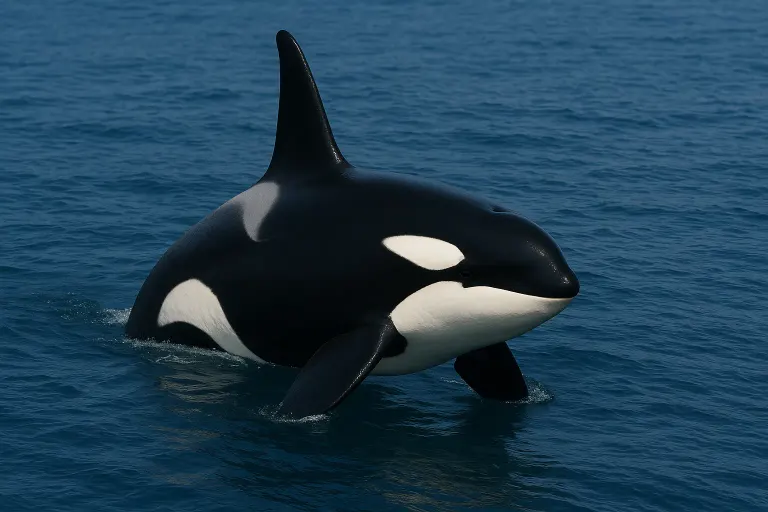
Tromsø lies far above the Arctic Circle, so from about late November to mid-January it has polar night, and the sun doesn’t rise above the horizon at all[11]. In mid-November you still get a few hours of daylight, with the sun low on the horizon for a short time. By December only a few hours of blue-grey twilight around midday remain, but even at the height of polar night that’s enough light to spot whales and enjoy the scenery[11]. The orcas are easy to see against the snow in the pale midday light[27]. The sky often glows deep blue, purple, or pink during these hours, which makes a lovely backdrop for whale watching[27] (picture orcas surfacing against a pink-orange twilight sky and snow-covered mountains[28]).
Tours are timed around this light. They usually leave in the early-morning dark, reach the whale fjords in the late-morning twilight, and come back in the afternoon as it gets dark. In December you might only have about 4 to 6 hours of usable light for spotting whales.
With so few daylight hours, save the twilight for outdoor activities like the safari, and plan something for after the tour, like a cozy meal or a Northern Lights chase. If the Northern Lights don’t interest you, you’ll probably spend more evenings indoors (Tromsø has good cafés and museums).
Weather and sea conditions
Temperatures in Tromsø and Skjervøy in November and December are often around -5°C to +2°C (23 to 35°F), and on the water the wind chill makes it feel colder. Snowfall, sleet, and icy winds are common. You’ll be standing outside on deck or in an open boat for long stretches while you watch the whales, so dress as if you’ll be sitting in a freezer with a fan blowing on you. That means lots of warm layers (wool and fleece underlayers plus an insulated parka) and protection for your extremities (thermal gloves, a hat, a scarf or neck gaiter, warm boots). Most tour operators give you an extra insulated flotation suit to wear on the boat, especially on RIB tours, but you should still wear plenty of layers under it[29][30]. Hand and foot warmers can save the trip.
The weather can change quickly and bring high winds or blizzards, and operators will cancel or postpone a tour if the sea is too rough or there’s a safety concern[31]. Build a few buffer days into your itinerary in case your safari has to be rescheduled because of bad weather[31]. If you only have one possible day for whale watching and a storm hits, you might miss out. The sea is usually calmer inside the fjords than on the open ocean, but the ride can still be choppy. If you’re prone to seasickness, consider taking medication and choosing a larger boat, since they handle waves better than small ones.
Sources:
Whale safari season and locations from Visit Tromsø[1][15]; recommended timing and whale behavior from travel guides[32][6]; current hotspot around Skjervøy[13][14]; tour operator examples from expert reviews[22][21][23]; polar night and weather considerations from local sources[11][31].
[1] [2] [15] [16] [18] [28] Whale watching in Tromso | Visit Tromso | Norway
https://www.visittromso.no/whale-watching
[3] [8] [9] [17] [19] [21] [22] [26] [29] [30] [31] [32] A Guide to Whale Watching in Tromso (+ Best Tours in 2025)
https://journeybybackpack.com/destinations/norway/whale-watching-in-tromso/
[4] [5] Whale Watching Tromsø - Eco-Friendly & Ethical Whale Safaris In Norway
https://whalewatchingtromso.com/
[6] [7] [11] [12] [13] [27] Guide to whale watching in Tromso (& the most ethical way to do it)
https://www.thesmoothescape.com/whale-watching-in-tromso-norway/
[10] [20] Best Location for Whale Watching in Early December – Lofoten or Tromsø? : r/tromsotravel
https://www.reddit.com/r/tromsotravel/comments/1jo8bxv/best_location_for_whale_watching_in_early/
[14] Arctic activities: Whale watching in Norway | Best Arctic
https://bestarctic.com/activities-in-northern-norway/whale-watching-in-norway/
[23] [24] [25] Arctic Whale Tours | Whale Safari in Northern Norway