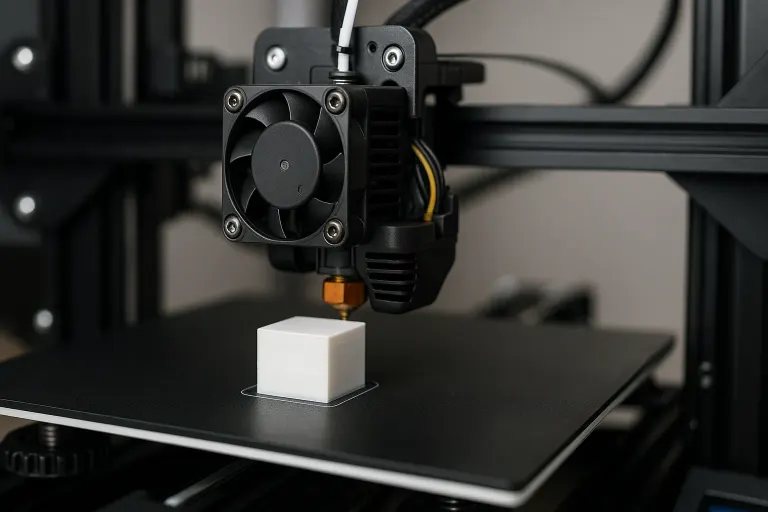
TL;DR
• PLA is safer than ABS or nylon, but it still releases ultrafine particles (UFPs) and volatile organic compounds (VOCs) when heated.
• The main emissions are lactide, aldehydes (like formaldehyde), and tiny plastic particles that can reach deep into the lungs.
• Short-term effects can include mild throat irritation, coughing, headaches, eye irritation, or nausea, especially in small, unventilated rooms.
• Ongoing exposure may contribute to chronic respiratory irritation or asthma, and possibly to cellular damage from inhaled nanoparticles. There's no solid evidence linking PLA fumes directly to cancer, but researchers caution that breathing any ultrafine particles over the long term isn't risk-free.
• Children, asthmatics, and sensitive people may be more likely to have symptoms, even at low exposure levels.
What PLA printing puts into the air
PLA (polylactic acid) is considered one of the safer 3D printing plastics, but it still releases ultrafine particles (UFPs) and volatile organic compounds (VOCs) when heated. Studies show that fused-filament printers emit gases and respirable particulates that can pose health risks[1]. Most of the particles are ultrafine (under 100 nm), which means they can penetrate deep into the lungs[1]. A 3D printer can emit on the order of 10^8 to 10^12 nanoparticles per minute while printing[2].
PLA tends to emit fewer particles than some other filaments: one EPA meta-analysis found that PLA printing averaged about 65,000 particles per cm³ of air, while ABS filament emitted around 300,000 particles per cm³ under similar conditions[3]. That makes the particle concentration for PLA roughly 4 to 5 times lower than for ABS.
PLA also emits VOCs, though generally less toxic ones than materials like ABS. The main vapor from heating PLA is lactide (a cyclic dimer of lactic acid, the building block of PLA)[4]. Lactide is considered relatively non-toxic at low concentrations, but concentrated exposure could irritate some people[4]. PLA can also release trace amounts of other VOCs: research has detected isovaleraldehyde (about 96 µg/m³) and methyl methacrylate (about 1-2 µg/m³) during PLA printing[5]. ABS releases much larger quantities of VOCs, including styrene (classified by IARC as probably carcinogenic to humans), which in tests reached about 2,200 µg/m³ in the air[5]. PLA does not emit styrene and produces far fewer VOCs in total than ABS[6].
In some cases, though, PLA emitted a small amount of formaldehyde (a known irritant and carcinogen). One study measured about 191 µg/m³ of formaldehyde from a particular PLA brand, which exceeded the UK health guideline for 30-minute exposure (100 µg/m³)[7]. Most PLA prints won’t reach that level, and all the VOCs measured from PLA stayed well below typical workplace exposure limits[8]. Still, even PLA can add low levels of air pollutants (like aldehydes or organic acids) to a confined space, and its particles carry any chemical additives or byproducts on their surfaces. PLA’s chemistry is corn-based and lacks the toxic monomers of ABS, but its ultrafine particles are similar in size and behavior to other UFPs and can be inhaled deep into the lungs[1][9].
How PLA compares with other filaments
In another study, ABS emitted 3 to 4 times more UFPs than PLA, and its fumes contain hazardous chemicals like styrene and acrylonitrile[10][6]. ABS fumes have a strong odor and can irritate the eyes and respiratory tract, sometimes causing dizziness or neurological effects at high exposure[6]. Nylon and certain polyesters can release caprolactam and other irritant vapors (with a “burning plastic” smell) that often irritate the throat and eyes. PLA often has a milder, slightly sweet or corn-like smell when printing. Health agencies consider it a lower-emission choice[11], but all common 3D printing filaments produce some UFPs and VOCs, and these could affect indoor air quality and health if they build up[1][12].
Short-term effects
In a home with little ventilation (a living room with the windows closed, for example), the short-term effects of PLA printing fumes are mostly irritation. Many users report mild respiratory or sensory symptoms after running a printer in a stuffy room. Ultrafine particles and certain VOCs can irritate the eyes, nose, throat, and lungs, especially in sensitive people[13][14].
In the airways, that can mean a dry or scratchy throat, an urge to cough or sneeze, or irritated nasal passages[14]. People with asthma or allergies might notice coughing, wheezing, or throat discomfort sooner[14].
QIDI’s store blog says some people get dull headaches, lightheadedness, or mild nausea when breathing 3D printer emissions in a poorly ventilated area[15]. The smell of heated plastic (even PLA’s slightly sweet one) can be nauseating in a closed space, and VOCs building up during long print jobs (along with stale, CO₂-heavy air in a closed, occupied room) may contribute to headaches and fatigue. Eyes can become irritated or watery after extended exposure, and you may feel a burning sensation in the nose or sinuses from chemical off-gassing. PLA’s VOC levels are low, but traces of formaldehyde or acetaldehyde could irritate mucous membranes[7].
In a typical home setup, these symptoms usually go away once fresh air comes in. Research so far suggests that brief exposure to moderate amounts of PLA emissions is unlikely to cause severe acute harm, since measured VOC levels during hobby printing often stay below occupational safety limits[16][8]. Serious acute effects (like chemical poisoning or lung injury) have not been documented from PLA in normal use.
Sensitivity varies from person to person, though. Someone who is chemically sensitive or asthmatic might get a scratchy throat or headache from low concentrations of fumes that others don’t notice, and children may also be more prone to irritation. Data on children are limited, but the EPA notes that enclosed classrooms with 3D printers could expose children to higher particle levels than adults, which is a concern because their lungs are still developing[17][18]. If you start to get a headache, dizziness, or throat irritation while printing, improve the ventilation or leave the area.
Long-term risks
PLA’s biodegradability and low toxin content make it safer than ABS, but repeated inhalation of any ultrafine particles or VOCs could pose cumulative risks. Researchers are still studying whether printing regularly in poorly ventilated spaces contributes over time to diseases like asthma, bronchitis, or even cancer[19][20].
Chronic exposure to fine and ultrafine particles can cause persistent inflammation in the respiratory tract, and UFPs from PLA that deposit deep in the lungs may be difficult for the body to clear[1]. Over months or years, this particle burden might contribute to reduced lung function or make conditions like asthma or COPD worse[21][9].
A recent survey of 3D printing users (in schools, labs, and libraries) found that about 60% reported recurring respiratory problems, such as frequent coughing or congestion, at least once a week[22]. The survey also found a strong link between higher exposure (more printing hours per week) and the development of asthma or allergic rhinitis in those users[22]. People with pre-existing asthma have also reported more frequent asthma attacks or chest tightness when working around 3D printers without proper ventilation[23]. Over years, even low-level VOC exposure could sensitize some people, leading to new allergies or aggravating conditions like chronic bronchitis or sinusitis.
PLA itself does not contain known carcinogens, but some byproducts of heating PLA (and certainly of other filaments) are classified as carcinogenic or mutagenic. Formaldehyde, which has been detected in small amounts from PLA printing, is a Group 1 carcinogen, linked to nasopharyngeal cancer and leukemia at high, sustained exposures. The concentrations from PLA printing are usually low, in the parts-per-billion range, though one PLA brand did exceed the UK guideline for 30-minute exposure[7]. Ultrafine particles have also been implicated in cardiovascular disease and possibly cancer, because they can induce oxidative stress and even cross into the bloodstream[9].
A 2024 toxicology study exposed human lung cells to particles from PLA and ABS printers. Cells exposed to the PLA particles showed markers of DNA damage (like double-strand breaks) and metabolic signs of oxidative stress, similar to the ABS-exposed cells, although the ABS particles tended to have a stronger effect[24][25]. Breathing PLA’s nanoparticles over the long term might therefore carry a risk of genotoxic effects or other long-term harm, though the real-world doses for a casual hobbyist are much smaller than the lab exposures.
No epidemiological study has yet confirmed a cancer risk from 3D printer use, and given PLA’s low emissions, any added cancer risk (if it exists) is likely very small compared with other everyday risk factors. A review of VOC emissions from desktop 3D printers cautions that vulnerable people (children, pregnant women, and people with lung or heart conditions) should avoid prolonged unventilated exposure to 3D printing fumes[26][27].
Reducing your exposure
The EPA and NIOSH advise treating all 3D printer emissions as potentially hazardous in the long run and taking steps to keep exposure down[11]. This matters most when the printer runs in a living space with limited ventilation. Print PLA in open or vented areas, use containment or filtration, and minimize your direct exposure to the fumes[11][37].
NIOSH (the CDC’s occupational research branch) and other experts say that with commonsense measures like ventilation, enclosures, lower-emission materials, and careful work practices, 3D printing can be done safely even in homes[11][29]. Agencies like the EPA and Health Canada have not yet set specific home exposure limits for 3D printer emissions. They do echo the recommendation to “print smart” and treat 3D printing like any hobby that produces fumes (similar to soldering or painting): provide fresh air and avoid inhaling the off-gas.
Ventilation
Always print in a well-ventilated area: open windows and use fans to exhaust air, or run the printer in a room with an outdoor exhaust vent if you have one. Never run the printer in a small, closed room that you spend long periods in (like a bedroom)[28]. If general ventilation is poor, consider a local exhaust system (a fume hood, duct, or snorkel over the printer) or a portable air purifier with a HEPA filter near the printer to capture nanoparticles[29]. In NIOSH tests in an office, particle counts in a room were much lower with dilution ventilation or filtration than in a sealed chamber[30][31]. In one case study, running 20 PLA printers in a well-ventilated open room resulted in much lower pollutant levels than a single printer in a tiny unventilated space[36].
Enclosures and filters
A dedicated enclosure, especially one with a HEPA and activated-carbon filter, can greatly reduce how much of the UFPs and VOCs spread into your room. It traps most of the emissions, and if it is vented or filtered, it can remove a large fraction of the particles before they escape[32][29]. Ideally the enclosure is well sealed and exhausts air outside or through a filter, and many newer printers and aftermarket kits come with filtration units for this. Enclosures are especially recommended for printers running in homes or classrooms, because they cut exposure at the source[11].
Materials and printer settings
When possible, use PLA or other lower-emission filaments. Switching from ABS or nylon to PLA greatly reduces your exposure to probable carcinogens like styrene and irritating fumes like caprolactam[6]. NIOSH specifically recommends using materials with lower emissions to reduce the hazard[11]. Avoid experimental or unknown blends that might contain toxic additives (some PLA blends with wood or metal powders, for instance, could emit additional particles or fumes). Use the lowest extrusion temperature that still gives good print quality, since higher nozzle temperatures tend to increase emissions exponentially[33]. Keep the printer well maintained (clean nozzle, correct settings) to prevent overheating or smoldering plastic, which can release more irritants[28].
Time and distance
NIOSH advises reducing the time spent near the printer during operation to lower the inhaled dose[11]. Even with ventilation, it’s a good idea to keep your distance while the printer runs. If you print in a shared space like a living room, you can start the job and leave the room, or stay at least a few meters away until it’s done. If you need to stay nearby (to watch a long print, for example), consider wearing a respirator with P100/HEPA cartridges (and organic vapor cartridges if VOCs are a concern), especially in a small room. The casual user generally doesn’t need this, but it is a sensible precaution for people who are particularly sensitive or when several printers are running.
Airing out after a print
Ultrafine particle levels can stay elevated for some time after a print finishes[34][35]. When you’re done printing, open windows or increase ventilation for a while to flush out lingering nanoparticles and odors. Don’t put your face into the build area right after a print, since the cooling print or nozzle may still be giving off hot emissions.
Sources
[1] [11] [17] [18] [38] 3D Printing Research at EPA | US EPA
https://www.epa.gov/chemical-research/3d-printing-research-epa
[2] [10] [22] [24] [25] [33] [41] Frontiers | 3D printer emissions elicit filament-specific and dose-dependent metabolic and genotoxic effects in human airway epithelial cells
https://www.frontiersin.org/journals/public-health/articles/10.3389/fpubh.2024.1408842/full
[3] Particle emissions from fused deposition modeling 3D printers: Evaluation and meta-analysis. | Science Inventory | US EPA
https://cfpub.epa.gov/si/si_public_record_Report.cfm?Lab=NERL&dirEntryId=344258
[4] [6] [9] [12] [13] [14] [32] [42] Is PLA filament fume toxic to markers? - Alveo3D
https://www.alveo3d.com/en/pla-filament-fume-toxic-3d-printing/
[5] [7] [8] [16] [20] [21] [23] [26] [27] Review of volatile organic compound (VOC) emissions from desktop 3D printers and associated health implications | Journal of Exposure Science & Environmental Epidemiology
[15] [19] [28] [37] PLA Filament and Your Health: Is 3D Printing with PLA Toxic? – QIDI US Store
https://us.qidi3d.com/blogs/news/is-pla-filament-for-3d-printing-toxic
[29] [30] [31] [36] Characterizing 3D Printing Emissions and Controls in an Office Environment | Blogs | CDC
https://blogs.cdc.gov/niosh-science-blog/2018/08/16/3d-printing/
[34] [35] 3D Printer Nanoparticles: Risks and Solutions! - Alveo3D
https://www.alveo3d.com/en/3d-printer-nanoparticle-emissions-dangers-and-solutions/